
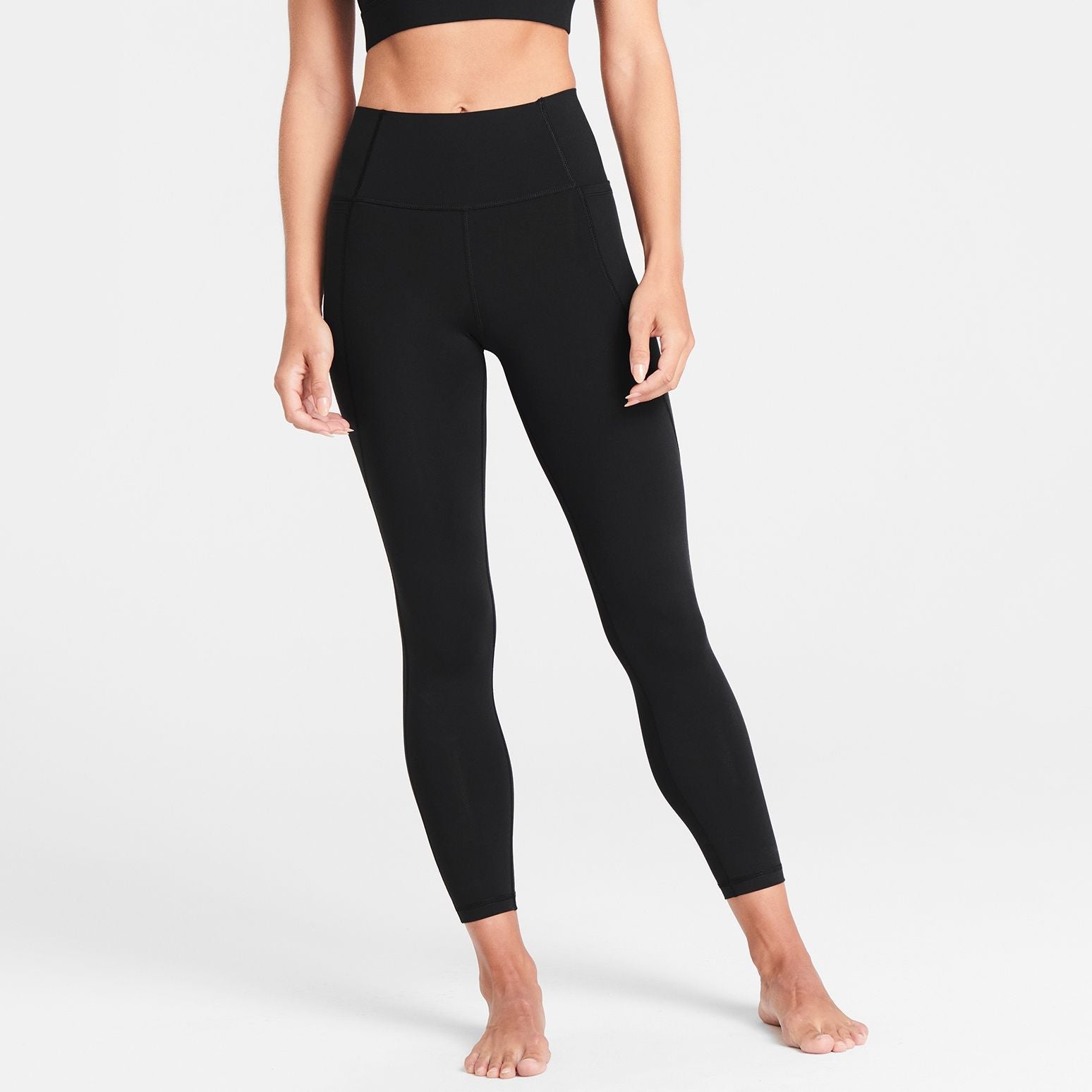

What touches your skin,
we test first.
Every Definite Articles fabric is sent to an independent, accredited laboratory before it goes into production. This page explains what we test for, how, and what the results say.
tested free from PFAS | BPAPerformance fabric is a chemistry decision.
Synthetics like nylon and polyester are not inherently harmful. What matters is how they are treated. Water-repellent finishes, wrinkle-control agents, and recycled inputs can each introduce chemistries a wearer never sees on the label.
You spend hours in activewear — training, sweating, living. That level of contact deserves a higher level of certainty. So before any fabric earns a place in our line, it earns it in a lab.
The panel, as it stands today.
Each fabric is screened by Intertek, one of the world's largest independent testing laboratories, using internationally recognized methods. This is where the panel stands now — it keeps growing.
PFAS — full panel
Per- and polyfluoroalkyl substances, screened compound by compound: PFOA, PFOS, PFHxS, PFHxA, C9–C14 PFCAs, and their related substances — more than forty chemistries in total.
Total fluorine
A second, broader net. Total fluorine screening catches fluorinated chemistry even beyond the named compounds on the panel.
Bisphenol‑A
BPA, measured by LC/MS with a detection limit of 0.1 parts per million — precise enough to find a trace, if there were one.
Formaldehyde & pH
Formaldehyde content and skin-compatible pH round out the current panel, alongside physical tests for colorfastness and wash stability.
A standard we keep raising. Our testing began with PFAS and BPA and has grown to include total fluorine, formaldehyde, and pH. As methods improve and new questions deserve answers, the panel expands with them.
Independent. Accredited. On record.
We don't test our own fabrics — Intertek does. Samples are submitted before production, evaluated against recognized international standards, and documented in a formal test report we keep on file for every fabric in the line.
The methods are the same ones used by regulators and certification bodies worldwide. The results belong to the record, not to us.
- Laboratory
- Intertek — independent, third-party accredited testing
- PFAS methods
- EN ISO 23702-1 · EN 17681-1 & -2
- Total fluorine
- EN 14582 · ASTM D7359
- BPA analysis
- Solvent extraction with LC/MS · detection limit 0.1 ppm
- When
- Before the fabric enters production
The most repetitive reading we publish.
Below, results from Intertek testing of our fabrics — as reported by the laboratory.
"Not detected" is the laboratory's finding at the stated detection limit for the fabric sample tested. Results shown are drawn from the sample reports published below.
Don't take our word for it.
Three Intertek reports, each covering the fabric behind a core category.
These are representative reports from our testing program. Current reports for any fabric in the line are available upon request — write to us and we'll send them.
Safe on skin. Considered after.
Traditional synthetics persist long after their useful life, breaking into ever-smaller microplastics. Our core fabrics are made with CiCLO® technology — biodegradable spots embedded throughout the fiber that allow microbes to break it down in landfill and marine environments at rates comparable to natural fibers like wool.
Same performance while you wear it. A built-in exit strategy when you're done.
Asked and answered.
Are synthetic fabrics safe to wear?
Synthetics like nylon and polyester are not inherently harmful — what matters is how they're treated. Chemical finishes added for water resistance or wrinkle control are where concerns arise. We use fabrics without those treatments, and we verify it: every fabric is tested by an independent laboratory before production.
What are PFAS, and why test for them?
PFAS are a family of fluorinated chemicals prized for water and stain resistance, and known for persisting in the body and the environment. They have historically been common in performance apparel. Our fabrics are screened for more than forty individual PFAS compounds, plus a total fluorine screen that catches fluorinated chemistry beyond the named panel.
Why does BPA show up in activewear?
BPA is an industrial chemical used in plastics, and it can carry over into synthetic fibers — particularly recycled polyester made from plastic bottles. That's why we test rather than assume. Our fabrics are analyzed for BPA by LC/MS with a detection limit of 0.1 parts per million.
Who does the testing?
Intertek — an independent, globally accredited testing laboratory. We submit fabric samples; they run the analysis and issue formal reports. The methods are internationally recognized standards used by regulators and certification bodies.
Can I see the test results?
Yes. Three reports are published on this page. Current reports for any fabric in the line are available upon request — just write to us.
What is CiCLO® and how does it work?
CiCLO® is a technology embedded in our nylon fibers during production. It creates biodegradable spots throughout the fiber that attract microbes in landfill and marine environments, allowing the material to break down at rates comparable to wool rather than persisting as microplastic. Performance is unchanged while you wear it.
Do you test every color and every batch?
We test each fabric before it enters production, and we continue testing as the line evolves. If you'd like the most recent report for a specific fabric or product, we're glad to share it — reports are available upon request.
Questions about our testing?
We read every note. Write to questions@definitearticles.com and a person — not a bot — will reply.
