


Performance fabrics - often referred to as synthetic fabrics - usually get a bad rap. When you hear "polyester" or "nylon," it's easy to instantly picture toxic chemicals, ocean pollution, and disposable fast fashion.
Why We Chose "Safer Synthetics" (And How We Keep Them Clean)
But here is the twist that often gets lost in the headlines: The problem isn't usually the fiber itself - it's the chemistry used to treat it.If you're a runner, a yogi, or just someone who hates a swampy cotton t-shirt, you know that synthetics perform better than anything else. The question shouldn't be "How do we get rid of synthetics?" It should be, "How do we make synthetics safe for human bodies?"
Here is the truth about performance fabrics, and how we engineered a cleaner way to sweat.
Why we (still) choose synthetics
If you like workout clothes that stretch, dry in minutes, and don't weigh you down, you are already on team synthetic.
While we love natural fibers for lounging, they struggle to keep up during a high intensity work out class:
- Cotton gets heavy, sticky, and loves to chafe when wet.
- Wool manages moisture well, but it dries slowly and can feel heavy.
- Synthetics (Polyester/Nylon) are the champions of sweat management. They are lightweight, durable, and hydrophobic (water-repelling).
No single fiber is magic. But for high-performance activewear, synthetics are simply the best tool for the job. We just needed to fix the way they are built.
The real problem: Hidden chemistry
The reason people are wary of synthetics is valid. Historically, performance fabrics have been treated with chemical cocktails that were never designed to sit against human skin - let alone be absorbed while your pores are open and sweating.
The two biggest offenders we watch out for are:
BPA: Often used in dyes and resins. It's a known hormone disruptor that has shown up in testing for both synthetic and natural fabrics (even cotton isn't immune if the dye is bad).
PFAS ("Forever Chemicals"): Used for water and stain resistance. These linger in the environment and the body, linked to various immune issues.
The Good News: These chemicals aren't necessary for good activewear. They are a choice manufacturers make. We made a different one: we remove them and verify safety with third-party testing.What about microplastics?
You have likely heard the stat: significant amounts of ocean microplastics come from textiles. In fact, US household laundry alone releases approximately 3.4 quadrillion pieces of microplastics into our oceans and waterways each year.A quick myth-bust: There is a common fear that we absorb microplastics through our skin like a lotion. Current science suggests that isn't the primary risk. The real danger is ingestion - microplastics entering the food and water supply. That's why we focus on preventing pollution at the source.
How we engineered "Safer Synthetics"
We didn't want to choose between performance and the planet. So, we decided to engineer our way out of the problem.
We utilize CiCLO® technology, an additive that changes the game for synthetic fibers.
Think of standard polyester like a piece of plastic cutlery—microbes in the ocean or landfill don't recognize it as food, so it sits there for centuries. CiCLO® adds "biodegradable spots" throughout the fiber that act like a map for microbes. It allows naturally occurring bugs to break down the fibers at rates comparable to wool.
- It's safe: Ingredients are OEKO-TEX® ECO PASSPORT certified.
- It works: It doesn't affect the stretch or durability while you wear it.
- It degrades: It only activates when exposed to long-term moisture and microbes (like in wastewater or landfills).
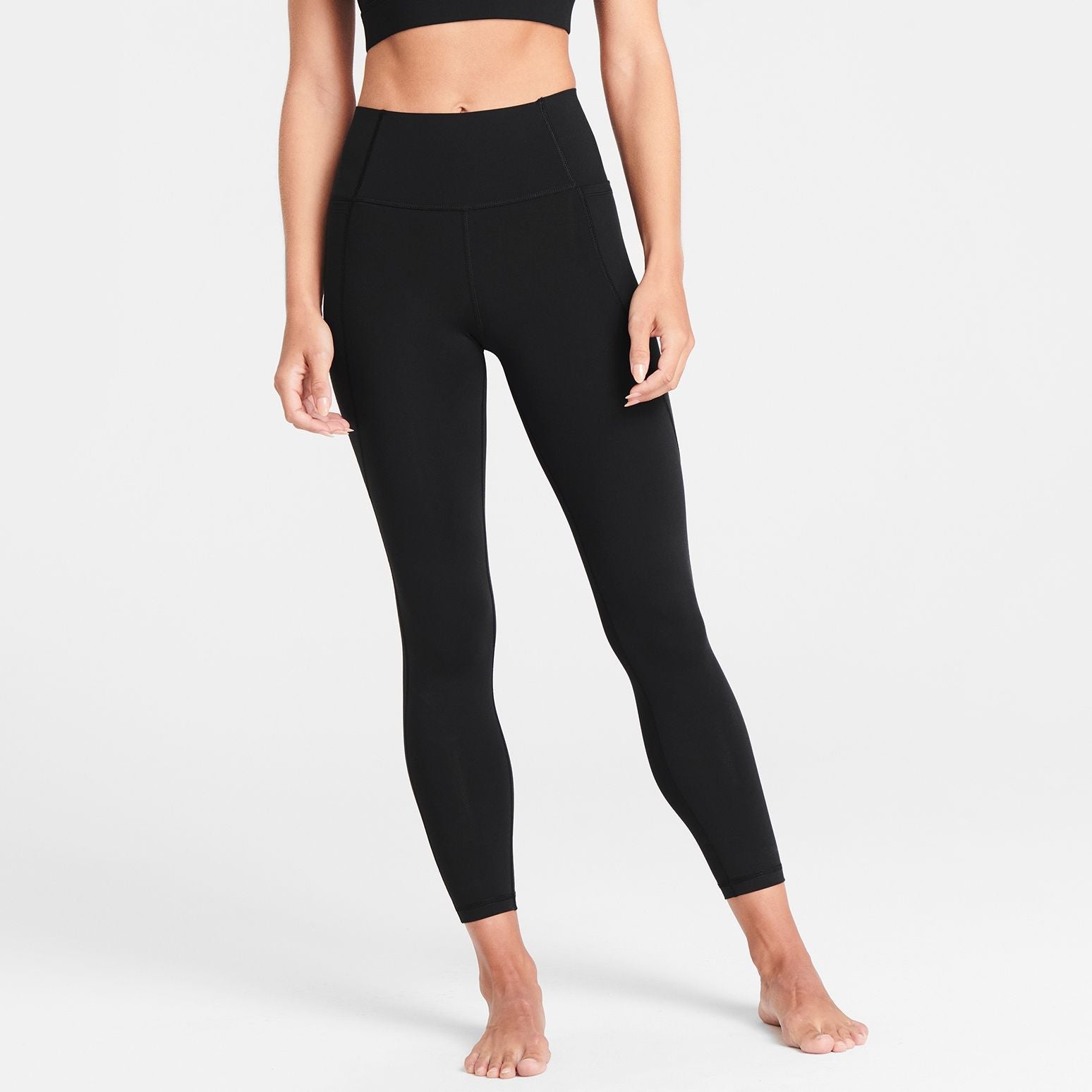
Our leggings, joggers, and shorts all use CiCLO®-infused fabrics—same stretch, same moisture-wicking, smaller footprint.
How to choose better gear
You don't need a PhD in chemistry to shop smarter. Look for these green flags when buying activewear:
- Verified Chemical Safety: Look for brands that explicitly test for BPA and PFAS.
- Construction Quality: Feel the fabric. Is it tight and smooth? High-quality knits shed less.
- End-of-Life Tech: Look for biodegradability solutions like CiCLO®.
- Wash Smart: You can help too. Wash less often, use cold cycles, and consider using a microfiber filtration bag.
Performance without the trade-off
Performance synthetics aren't the villain. Bad design is.
We built Definite Articles because we wanted to keep the stretch, the durability, and the moisture control we love, without the unnecessary toxins or the plastic guilt. It's not just about making clothes; it's about proving that high performance and clean chemistry can coexist.
Curious to see the proof?
