


In short: yes, some do. The longer answer is more useful.
Recent reporting has confirmed what wellness-aware consumers already suspected. The Washington Post profiled “forever chemicals” in workout wear in April 2026. That same month, the Texas Attorney General opened an investigation into Lululemon over PFAS - the family of "forever chemicals" found in activewear. The Center for Environmental Health has filed actions against dozens of the largest athletic brands over BPA exposure in their clothes. It’s pervasive - a 2022 peer-reviewed study found an alarming number of workout leggings contained high levels of PFAS.
Awareness is one thing. Knowing what to look for is another. So, how do you actually figure out what you're buying? This article is meant to be a practical guide: what these chemicals are, where they actually come from, what the safety labels really mean, and the five questions that tell you what you're buying.
Where the chemistry comes from
PFAS typically appears in activewear via finishes used to make fabrics water- or stain-resistant and more durable. BPA shows up most often via elastane components, recycled polyester, or polyurethane in elastics. Neither is usually printed on a label.
It also surprises most people to learn that the presence of PFAS in apparel is not, on its own, illegal in the U.S. today. That, however, is beginning to change. California’s AB 1817 prohibits PFAS in apparel sold in the state, with enforcement phased in through 2027. New York has passed comparable legislation, and several other states are moving in the same direction. For now, however, much of the chemistry in everyday activewear sits in a regulatory gray zone — legal to sell, but increasingly visible, and increasingly questioned.
And importantly, the conversation is no longer simply “synthetic versus organic,” since forever chemicals are found in both.
On organics - it’s not automatically safer just because it’s made out of cotton. Endocrine-disrupting chemicals can still be present in garments marketed as “organic,” if the dyes, finishes, treatments, and other downstream processing used during manufacturing go unchecked. The category label alone does not always guarantee the finished garment, the one you’d wear, has been tested.
What “PFAS-free” and “BPA-free” usually mean
As awareness of these chemicals has grown, more brands are marketing themselves as non toxic or clean. Often the claim rests on a supplier certification issued earlier in the supply chain - at the fiber or yarn stage (e.g. organic cotton), before dyeing, finishing, or final assembly. That matters, because new chemistry can enter the product at any of those later steps.
The more meaningful standard is finished garment testing: independent lab analysis of the actual piece you wear, after all processing is complete. Because ultimately, consumers should know what is on the finished article that they put on their skin.
How Definite Articles approaches it
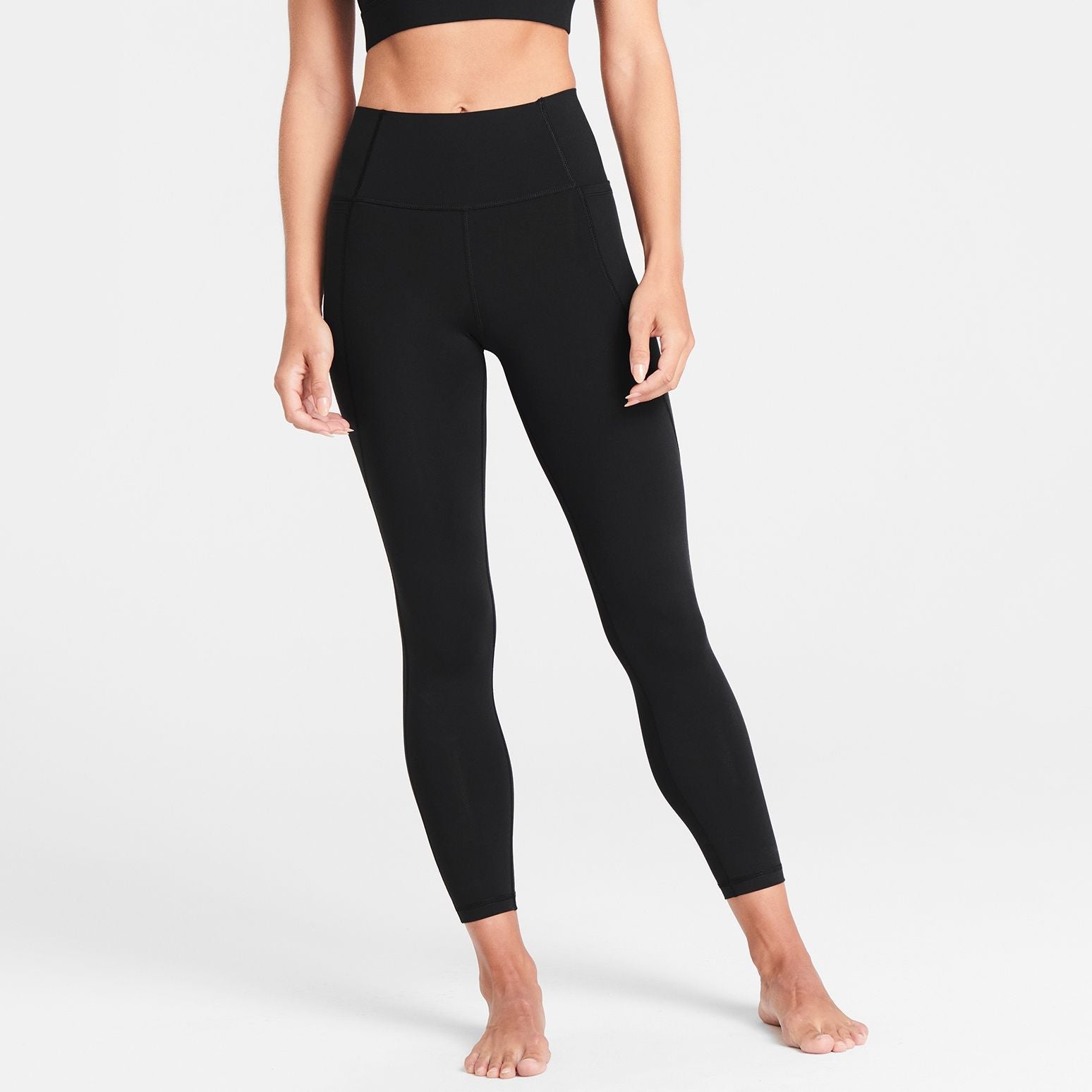
Every Definite Articles apparel item - including the Trimline 7/8 Legging, the Riverline Racerback Bra, and our Men’s collection - is independently lab-tested at the finished garment level for BPA, PFAS, and 50+ other substances commonly found in activewear.
Test reports are kept on file and shared on request - we don't just make a claimed or assumption, we prove it.
What to ask before you buy
- Was the actual finished garment tested - or only the raw fiber or fabric? Most brand claims live at the fiber level, where contamination has yet to enter.
- Which specific substances were screened - PFAS, BPA, phthalates, formaldehyde, heavy metals - and at what detection thresholds? “Tested” without specifics often means less than it sounds.
- Was the testing done by an accredited independent third-party lab, or self-reported by the brand or its supplier?
- How recent is the testing, and is it repeated across production batches? Chemistry can shift between runs even when the supplier doesn’t.
- Will the brand share the actual lab report on request - or only point to a certification logo? A logo summarizes; a report shows what was looked for and what was found.
Simple questions. Clarifying answers.
Learn more:
EcoCult analysis on organic textile certifications and hidden chemistry
