


Most of us treat coffee as the thing that gets us to the gym. The research says it does a lot more once we're there.
The short version
- Caffeine is the most studied performance aid in sport, with benefits for endurance, strength and sprint power.
- It works by lowering perceived effort, so the same session feels easier and you push harder.
- Keep it modest: a single espresso, 45 to 60 minutes before you train.
- Hormones change how women process caffeine across the cycle, so the right amount is personal and worth dialing in.
Caffeine is the most studied performance aid in sports science, and the evidence is unusually consistent. The International Society of Sports Nutrition points to a review signed by leading researchers in the field, concluded that caffeine reliably improves muscular endurance, strength, sprint performance, and, most consistently of all, aerobic endurance.
And the evidence keeps stacking up. A 2024 meta-analysis of cycling time trials found that a moderate dose of caffeine measurably cut riders' completion times. What's striking is how far back the finding goes: in a landmark Ball State University study from the late 1970s, trained cyclists rode to exhaustion in 75 minutes on placebo and 96 minutes after caffeine. Fifty years and hundreds of studies later, the conclusion has barely moved.
Why it works
Caffeine doesn't give you energy so much as it hides the cost of using it.
When using caffeine from coffee correctly, it can decrease perceived effort during exercise, which often allows you to work out harder. Kacie Vavrek, RD — Ohio State University Wexner Medical Center
Caffeine blocks adenosine, the compound that signals fatigue to your brain. The work is the same. It just feels lighter, so you do more of it.
The effect isn't limited to long runs. “Studies have shown the benefits of caffeine consumption for endurance and high-intensity exercise that lasts more than 20 minutes,” Vavrek notes. Research also suggests benefits after the workout: a University of Rhode Island study found caffeine significantly reduced post-exercise muscle soreness compared to placebo.
How to use it
The evidence points to a simple protocol.
Keep it modest
A single espresso, or a shot or two before you head out, is plenty for most people. More is not better; higher amounts add jitters, not performance.
Timing
Drink it 45 to 60 minutes before you train. That's when blood caffeine levels peak.
Know yourself
“The response to caffeine is very individual, and can depend on many things, including genetics and whether you're a regular coffee drinker,” Vavrek says. If a pre-run coffee leaves you anxious or wrecks your sleep, scale back. Outside has a useful primer on finding the amount that works for your body.
Coffee vs. pre-workout powders
Open the label on most pre-workout tubs and the active ingredient doing the heavy lifting is caffeine, usually 150 to 300 mg a scoop. That's the same compound in your coffee, often at a similar dose. The powder adds a proprietary blend of sweeteners, dyes, and extras like beta-alanine (the tingle) or citrulline, most of which have thinner evidence behind them than caffeine itself.
So the honest comparison is simple. A cup of coffee gives you the one ingredient that reliably works, at a known dose, with no artificial sweeteners and a fraction of the cost. Pre-workout powders buy you convenience and a standardized scoop, which some people prefer. But if performance is the goal, you're mostly paying extra for the caffeine you could get from a good espresso.
A note for women
Most caffeine studies were run on men, and the standard dosing advice comes from that work. The performance benefit holds for women, but a few things change the picture.
Estrogen slows how fast the body clears caffeine. Research shows that CYP1A2, the enzyme that breaks caffeine down, is less active when estrogen is high, so caffeine lingers longer. In practice, the same cup can hit harder and stay with you later into the day depending on where you are in your cycle. For an evening session, an earlier or smaller amount protects your sleep.
The menstrual cycle also shifts how the body fuels itself, with fat burning tending to run higher in the luteal phase (the roughly two weeks before your period). Some women find caffeine feels different, or that jitters and disrupted sleep are worse, in that window. None of this cancels the benefit. It just means the right amount is more personal than a one-size chart suggests, and worth dialing in over a few sessions rather than copying what works for someone else.
Make it coffee worth drinking
If coffee is going to be part of your training, it may as well be good coffee. A quality medium roast or espresso from a roaster like Peet's Coffee delivers a reliable caffeine hit without the sugar load of canned pre-workouts or energy drinks, plus polyphenols and antioxidants those products don't have. Black is the cleanest option before training; heavy cream and sugar slow things down.
From the DA Community
“An espresso 40 minutes before a ride is non-negotiable for me. It's not about the jolt — it just makes the first hard climb feel eaiser, andthen I've stopped thinking about my legs and I'm just riding.”
— John, endurance cyclist · @themovementjourney
His go-to kit: the Tor Shorts and the Moraine Tee.
The ritual is the point
There's a reason the pre-workout coffee has become a ritual for so many runners and lifters. It marks the transition. Kettle on, kit on. The few minutes it takes to drink a cup is about the time it takes to lace up, pull on the piece you always reach for first, and get out the door. By the time you hit your stride, the caffeine is hitting too.
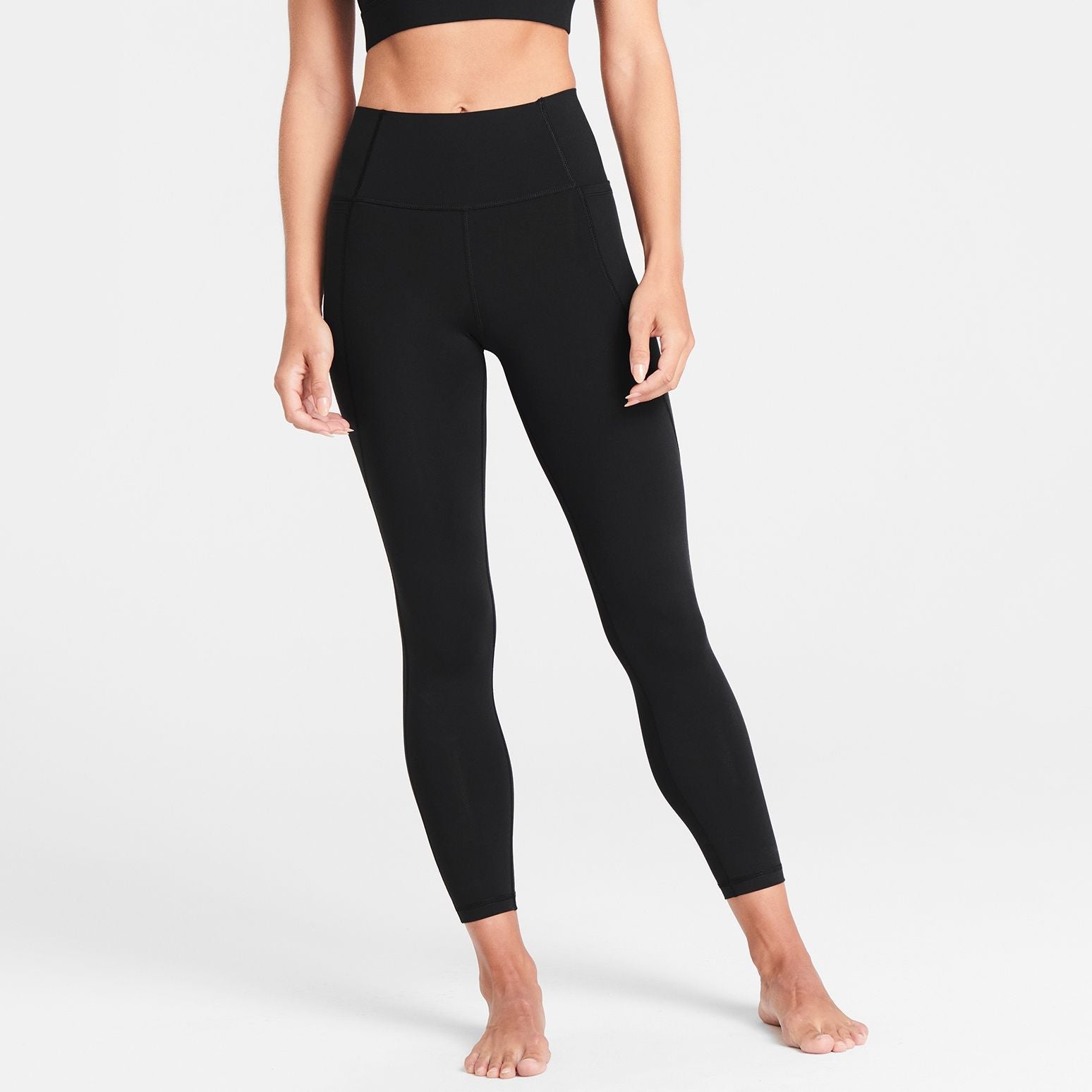
That's the part worth paying attention to. Performance isn't one big decision; it's a stack of small, repeatable ones. The right amount of caffeine. The kit that feels like nothing, so you forget you're wearing it and just train.
Performance Without Compromise
This is the thinking behind what we make at Definite Articles: independently lab-tested apparel, free from PFAS, BPA and 50+ other chemicals, built to disappear into the session rather than distract from it — so your gear works as quietly as a good cup of coffee does.
Shop Women Shop MenGood inputs, repeated daily, compound. That's true of training, of coffee, and of the few things you choose to put on before either.
Sources
ISSN Position Stand: Caffeine and Exercise PerformanceCaffeine and Cycling Time-Trial Performance: Systematic Review & Meta-Analysis (2024)
Kacie Vavrek, RD — OSU Wexner Medical Center
Outside: How Much Caffeine Do You Need for Better Performance?
This article is for general information and isn't medical advice. Caffeine affects everyone differently — check with a healthcare professional if you have questions about your own intake.
